In the relentless pursuit of upper-body size and strength, many clients hit an invisible ceiling. They press heavier, pull harder, and add more volume, yet their chest and back development stalls. While the fitness industry often blames genetics or nutrition, the true culprit is almost always a lack of movement precision. The target muscle is not determined by the name of the exercise—it is determined by how the body lines up, how the joints track, and where the mechanical tension travels. To break through these plateaus, personal trainers must move beyond standard exercise prescriptions and master the intricate chest and back biomechanics that dictate real, science-based muscle hypertrophy.
Every rep prescribed carries a specific mechanical tension, but without the correct joint angles, that tension often spills over into assisting muscle groups or joint capsules. Integrating precise biomechanical principles into client programming is the only way to ensure that heavy loads actually land on the target tissues, maximizing the hypertrophy stimulus while protecting the client from wear and tear. Over the long term, moving from generic training to a technically refined approach based on joint alignment is what transforms an average trainer into a high-level specialist.
Quick Answer
Chest and back biomechanics dictate how muscle fibers are recruited based on force angles, elbow paths, and joint alignment. To maximize hypertrophy, the movement must align directly with the natural direction of the muscle fibers. For the chest, this means tracking the elbows horizontally or at a slight incline to activate the distinct sternocostal and clavicular heads of the pectoralis major. For the back, it requires pulling with the elbows (not the hands) and controlling scapular movement to fully engage the latissimus dorsi and mid-back. Utilizing digital assessment tools like the PersonalGO app can help trainers track and verify these biomechanical adaptations over time.
Mastering Chest and Back Biomechanics: Force Angles and Alignment
The pectoralis major and latissimus dorsi are complex, multi-directional muscle groups. The chest is anatomically divided into the clavicular (upper) head and the sternocostal (middle/lower) head, each requiring specific arm paths to maximize mechanical tension. Standard flat bench pressing, while effective, often fails to fully stimulate the upper pec fibers if the angle of force is too low, or it can overtax the anterior deltoids if the movement path is not controlled. Research suggests that incline pressing angles between 15° and 30° are optimal for clavicular head activation while minimizing shoulder strain.
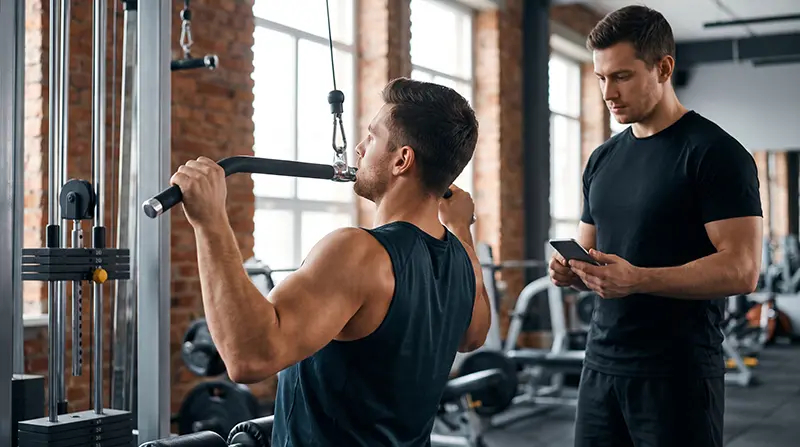
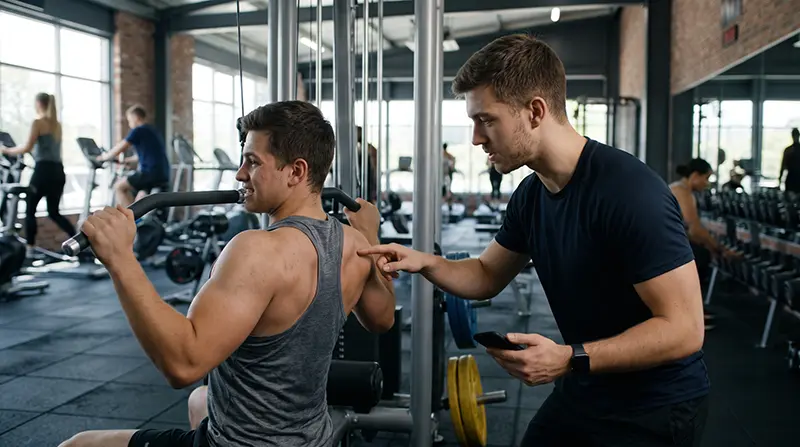
For the back, the challenge lies in isolating the latissimus dorsi from the upper traps, rhomboids, and biceps. Many clients perform rows and pulldowns by pulling with their hands, which turns a back exercise into a forearms-and-biceps-dominant movement. To truly optimize chest and back biomechanics, trainers must understand that true back hypertrophy requires the client to drive with the elbows, keeping the shoulder blades active and engaged. Understanding these fiber orientations and force vectors allows trainers to customize exercises based on a client’s individual anatomy rather than relying on a one-size-fits-all model.
Advanced Chest and Back Biomechanics: Length-Tension Relationships
Hypertrophy is highly dependent on the length-tension relationship of the muscle fibers. Training a muscle through its full range of motion, particularly at longer muscle lengths, has been shown to be a potent stimulus for muscle growth. For the chest, exercises like deep dumbbell presses, deficit push-ups, and cable flyes allow the pectoralis major to experience deep stretch-mediated hypertrophy. In contrast, back exercises like pulldowns and rows require a stable torso and a controlled eccentric phase to keep the lats under continuous tension, especially in the fully stretched position at the top of the movement.
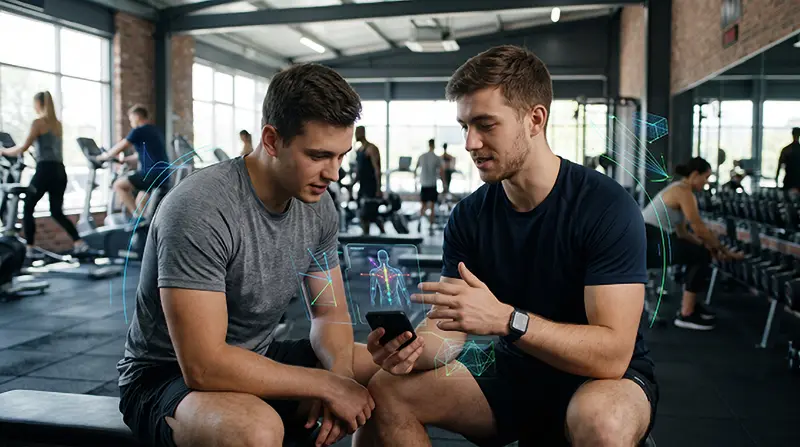
However, forcing clients into extreme ranges of motion without verifying their active mobility can be counterproductive. Every client has unique joint mechanics, and pushing a shoulder or shoulder blade past its natural active range can quickly lead to impingement or joint irritation. To safely apply advanced chest and back biomechanics, professional trainers use digital tools and screening protocols to assess these movement ranges before prescribing heavy, loaded variations.
Table: Chest and Back Biomechanics – Technique and Alignment
Mastering these movement cues can help ensure that the load is actually falling on the target tissues rather than assisting muscle groups or joints:
| Movement Pattern | Common Biomechanical Mistake | Correct Technique & Focus |
|---|---|---|
| Incline Chest Press | Assuming the angle alone guarantees upper chest tension; letting the shoulders dominate. | Adjust the elbow path until tension runs across the upper pecs; keep the shoulder blades retracted and stable. |
| Chest Dips | Dropping too quickly into the bottom range with no torso or elbow control, stressing the shoulders. | Use controlled three-quarter reps and stop before lockout if triceps dominate. Keep a forward torso lean to load the pecs. |
| Lat Pulldowns | Pulling with the hands and chasing the handle, allowing the biceps and traps to take over. | Lock in, drive your elbows down and back, pause at the bottom, and focus on contracting the lats. |
| Seated Rows | Turning every rep into a lower-back heave, using momentum and spinal flexion. | Keep a stable torso, use chest support when possible, and pull with the elbows to target the lats and mid-back. |
Measuring Results from Proper Chest and Back Biomechanics
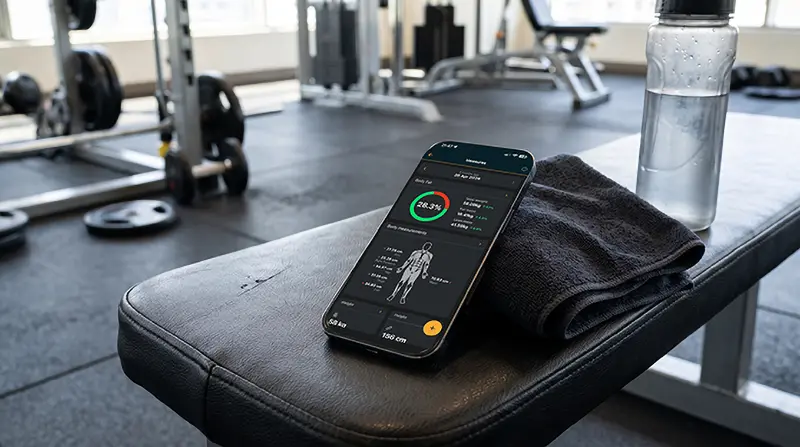
Optimizing chest and back biomechanics is only half the battle; trainers must also be able to track if these refinements are translating into real physical results. Traditional methods of checking progress—such as manual calipers or a standard scale—can be subjective, inconsistent, and uncomfortable for many clients. A digital assessment provides an objective, data-driven way to measure muscle growth and body composition changes over time.
For trainers who want to provide a premium service, the PersonalGO PRO Plan offers a comprehensive mobile platform. Featuring an advanced AI-powered Body Scan, the app allows clients to easily take photos from a mobile device, which the AI then analyzes to calculate body composition, circumferences, and progress. Combined with features like digital contract signing and custom onboarding, the PersonalGO app equips trainers with everything they need to operate a highly professional, results-oriented training business.
Enhance Your Training. Get the PRO Plan Now.
AI-powered progress tracking and comprehensive business management.
FAQ – Frequently Asked Questions
Why are chest and back biomechanics important for hypertrophy?
Chest and back biomechanics dictate the direction of force and joint angles required to load targeted muscle groups. Properly aligning elbow paths and force vectors with the orientation of muscle fibers ensures that tension is placed directly on the pectoralis major and latissimus dorsi, rather than allowing joint stress or secondary muscles to take over.
Can you target the upper and lower chest independently?
Yes. Although the pectoralis major functions as a single muscle, its distinct clavicular (upper) and sternocostal (middle/lower) heads can be selectively emphasized. Biomechanical studies show that incline angles of 15° to 30° increase recruitment of the upper chest, while flat and decline variations primarily target the middle and lower chest fibers.
Scientific References
- TREBS, A. A., et al. An electromyography analysis of 3 muscles surrounding the shoulder joint during the performance of a chest press exercise at several angles. Journal of Strength and Conditioning Research, 2010. Available at: Access PubMed Article.
- SIGNORILE, J. F., et al. A comparative electromyographical investigation of muscle utilization patterns using various hand positions during the lat pull-down. Journal of Strength and Conditioning Research, 2002. Available at: Access PubMed Article.

About the Author
The PersonalGO team is dedicated to providing personal trainers with science-backed insights, advanced digital tools, and practical business strategies to elevate client results and scale their training business.