Estimated reading time: 7 minutes
In this article
When the goal is building muscle, how you organize your stimulus and rest dictates your results. That is why the push pull legs routine remains the most popular training split used by personal trainers and strength coaches worldwide. It offers the perfect balance between volume, intensity, and recovery time.
However, with the exponential growth of online fitness coaching, designing an effective workout program is only half the battle. The other half is ensuring your client executes with proper form, achieves progressive overload, and avoids plateaus. In this guide, we will break down the PPL split and show how the most profitable trainers in the market use technology to track hypertrophy remotely.
Quick Summary
The push pull legs routine divides muscle groups into 3 synergistic sessions. For natural lifters, training each muscle group twice a week (a 6-day PPL split) maximizes protein synthesis. To guarantee results in an online coaching business, trainers must ditch static PDFs and use management apps (like PersonalGO) that offer video demonstrations and real-time load and RPE tracking.

The Science: Why is the PPL split the gold standard?
Myofibrillar hypertrophy occurs when a muscle is subjected to a mechanical tension stimulus greater than what it is accustomed to, followed by an adequate recovery period. Scientific literature shows that muscle protein synthesis remains elevated for 36 to 48 hours after a resistance training session.
This means that training a muscle only once a week (the traditional “bro-split”) leaves gains on the table for natural lifters. The push pull legs routine allows clients to hit every muscle group every 3 to 4 days, optimizing the anabolic environment without generating overtraining or central nervous system fatigue.
Classic Structure: The Push / Pull / Legs model
The smartest way to build a push pull legs routine is by grouping muscles based on their biomechanical function. This prevents a workout on one day from hindering recovery for the next.
| Workout A (Push) | Workout B (Pull) | Workout C (Legs) |
|---|---|---|
| Chest (e.g., Bench Press, Flyes) | Back (e.g., Lat Pulldowns, Rows) | Quadriceps (e.g., Squats, Leg Press) |
| Shoulders – Front/Side (e.g., Overhead Press) | Rear Delts (e.g., Reverse Flyes) | Hamstrings (e.g., RDLs, Leg Curls) |
| Triceps (e.g., Skullcrushers, Pushdowns) | Biceps (e.g., Barbell Curls, Hammer Curls) | Calves (e.g., Seated/Standing Calf Raises) |
This synergistic division ensures that when the client is training Chest (Workout A), the Triceps are already being recruited as synergists, optimizing time. The next day (Workout B), those pushing muscles rest completely while the Back and Biceps take over.
The biggest programming mistake in online coaching
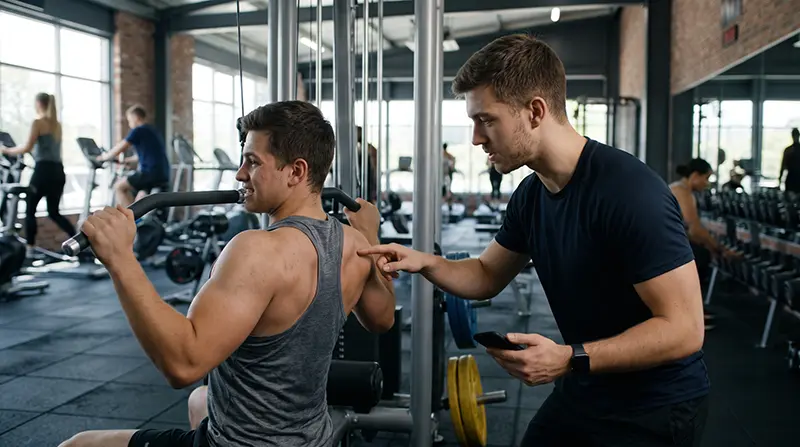
If the PPL split is so effective, why do so many online coaching clients fail to see results? The answer lies in poor exercise execution and a lack of progressive overload.
When a personal trainer sends a workout in an Excel spreadsheet or PDF, the client loses the visual reference. They don’t know the correct tempo, they compromise range of motion, and worst of all, the trainer has no reliable way of knowing if the client lifted 20 lbs or 40 lbs last week.
Without strict control of training variables (Volume x Intensity), periodization fails, and hypertrophy plateaus.
How to manage and track client progress online (Free)
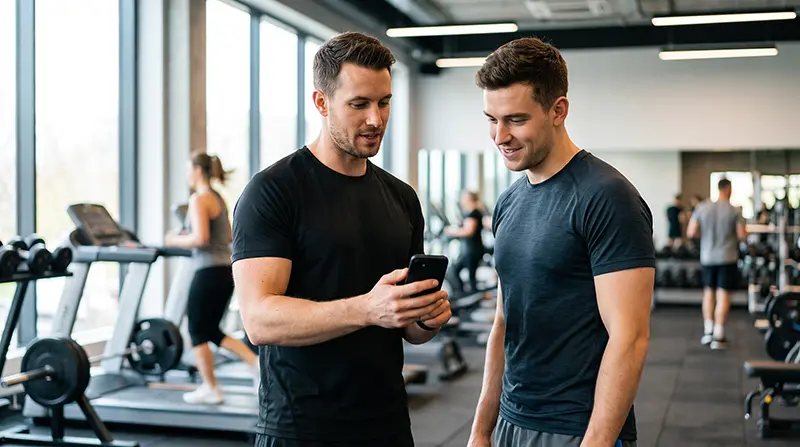
To elevate your online coaching to a premium level and ensure that your push pull legs routine generates real results, transitioning to a digital ecosystem is mandatory.
PersonalGO has consolidated itself as the go-to app for personal trainers by solving these exact pain points, without charging professionals high monthly subscription fees:
- Perfect Execution: Clients receive their workouts on an app with access to a native library of over 4,000 HD videos, ensuring ideal posture, tempo, and range of motion.
- Overload Tracking: The system automatically logs the weight lifted in each set alongside the Rate of Perceived Exertion (RPE). You know exactly when it is time to increase the load.
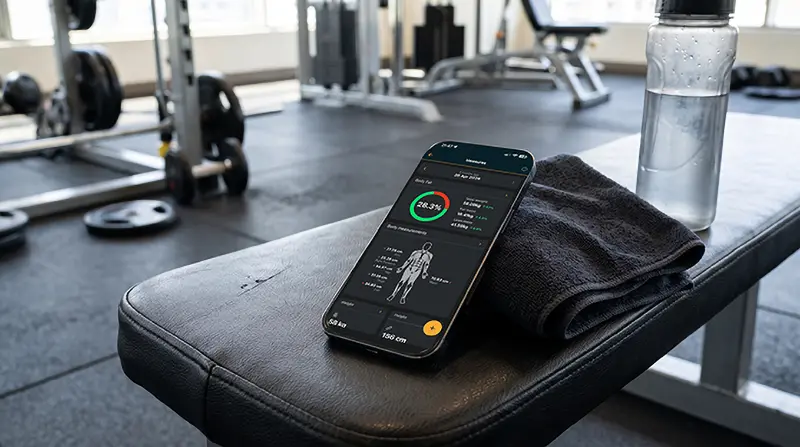
- AI Body Scanning: Forget inaccurate measuring tapes. PersonalGO’s AI performs a full body scan using smartphone photos, detecting millimeter-level gains in lean mass and drops in body fat, generating high-value progress reports.
The biggest advantage for your fitness business: PersonalGO is the only platform that allows trainers to manage unlimited clients 100% free for life.

Manage your business on desktop and deliver straight to your client’s mobile app.
Frequently Asked Questions
What is a push pull legs routine?
A push pull legs routine (PPL) is a weightlifting split that separates the body’s muscle groups into three distinct sessions based on their biomechanical function: pushing movements (chest, shoulders, triceps), pulling movements (back, biceps), and leg movements (quads, hamstrings, calves, glutes).
How many days a week should I do a PPL split?
To maximize hypertrophy, the optimal frequency is the PPL 2x model, which means training 6 days a week with 1 rest day (e.g., Monday to Saturday). For clients with less time, it can be run 3 to 4 days a week on a rotating schedule to ensure continuous stimulus.
What is the best app to build a push pull legs routine?
For personal trainers, PersonalGO is the best technological solution on the market. It allows you to build training programs, access over 4,000 demonstration videos, and track your clients’ progressive overload without charging the professional any monthly fees (unlimited clients for free).
Scientific References
The structure of this guide is based on exercise physiology guidelines and peer-reviewed studies:
- Training Frequency: Schoenfeld, B. J., et al. (2016). Effects of Resistance Training Frequency on Measures of Muscle Hypertrophy: A Systematic Review and Meta-Analysis. Sports Medicine.
- Protein Synthesis & Hypertrophy: Damas, F., et al. (2016). Resistance training-induced changes in integrated myofibrillar protein synthesis. The Journal of Physiology.
- Clinical Guidelines: American College of Sports Medicine (ACSM) — Progression Models in Resistance Training for Healthy Adults.

About the Author
This content was produced by PersonalGO’s team of certified strength coaches and fitness experts, based on validated scientific evidence.