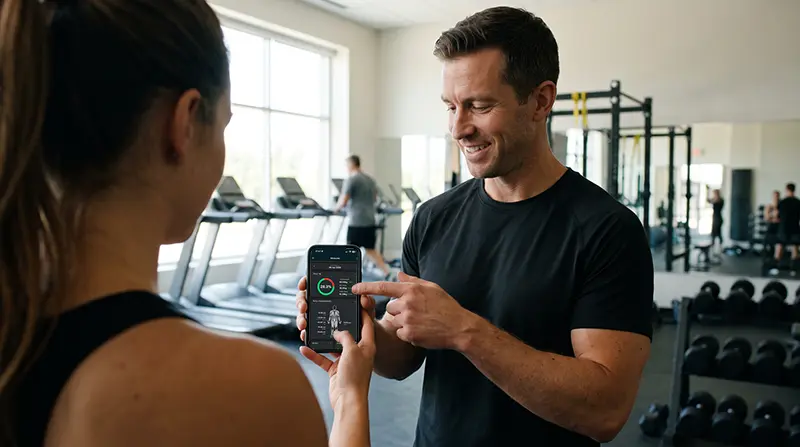
The fitness industry has transformed dramatically. What was once a luxury, having a personal trainer, is now accessible to millions through online personal trainer.
You no longer need to live near a high-end gym or pay premium prices for in-person sessions. But this accessibility raises an important question: Is an online personal trainer as effective as training with someone in person?
The short answer is yes. Research consistently shows that remote training produces similar results to in-person training for strength and fat loss.
But there’s more to the story. An online personal trainer offers unique advantages and challenges that differ from traditional coaching. Understanding both will help you make the right decision.
What Is an Online Personal Trainer? How It Differs from In-Person
An online personal trainer isn’t just someone who sends you generic workout PDFs. A legitimate coach provides personalized programming, form feedback, and accountability through video calls, messaging, and app-based platforms.
Here’s what a typical online personal trainer relationship looks like:
Initial Assessment: You complete a detailed questionnaire about your goals, training history, injuries, and lifestyle.
Your coach uses this information to understand your unique situation.
Custom Programming: Based on your assessment, your coach designs a workout program tailored to your specific needs, equipment, and schedule.
Ongoing Communication: You log your workouts in an app or send updates to your coach. They review your progress and adjust the program as needed.
Form Feedback: Many online personal trainers use video submissions or live video calls to assess your form and provide corrections.
Accountability: Regular check-ins keep you motivated and on track. Your coach is invested in your success.
The Evolution of Fitness Coaching
Ten years ago, virtual coaching meant email updates and generic programs. Today, online personal trainers use sophisticated platforms with video demonstrations, progress tracking, and real-time communication.
This evolution has made online personal training not just viable, but often superior to in-person training for many people.
5 Key Benefits of Hiring an Online Personal Trainer
Benefit 1: Why an Online Personal Trainer Offers Flexibility
This is the biggest advantage of an online personal trainer. You train when it works for you. No commute to the gym.
No waiting for an appointment slot. If you prefer to work out at 5 AM or 9 PM, your coach can accommodate.
This flexibility is why remote training has seen explosive growth. Google searches for “online personal trainer” have increased 414% over the past year.
Benefit 2: Access to Top Talent with an Online Personal Trainer
With an online personal trainer, geography is irrelevant. You can work with a coach in another state or country. This means you’re not limited to the trainers available in your local area. You can find someone who specializes in your specific goal, whether that’s powerlifting, fat loss, athletic performance, or rehabilitation.
Benefit 3: Online Personal Trainer Costs Less Than In-Person
In-person personal training in major cities costs $75-$150+ per session. An online personal trainer typically charges:
- $50-$100 per month for unlimited messaging and programming
- $30-$60 per session for pay-as-you-go
- Hybrid models combining both
The cost savings are substantial, making professional coaching accessible to more people.
Benefit 4: Data-Driven Coaching from Your Online Personal Trainer
The best online personal trainers use apps and platforms that track your progress systematically. Every workout is logged. Every metric is recorded. This data allows your coach to make informed adjustments to your program based on objective information rather than guesswork.
You get detailed insights into your progress, and your coach gets the data needed to optimize your training.
Benefit 5: Online Personal Trainer Reduces Gym Intimidation
For beginners, the gym can be an intimidating place. An online personal trainer allows you to build confidence in a more private setting before transitioning to a gym environment. You can ask questions without feeling self-conscious, and your coach can guide you through the learning curve.
How to Choose the Right Online Personal Trainer
Not all online personal trainers are created equal. Here’s what to look for.
Essential Credentials and Experience
Look for relevant certifications:
- NASM (National Academy of Sports Medicine)
- ACE (American Council on Exercise)
- ISSA (International Sports Sciences Association)
- ISSN (International Society of Sports Nutrition)
These require passing rigorous exams and continuing education.
Ask about experience with your specific goal:
- If you want to lose fat, find a coach with a track record of helping clients achieve that
- If you want to build muscle, find someone who specializes in hypertrophy
- If you’re recovering from injury, find a coach with rehabilitation experience
Specialization matters.
Communication Style and Fit
You’ll be working closely with this person. Make sure their communication style resonates with you.
Some coaches are:
- Motivational and high-energy
- Analytical and data-focused
- Hands-on and detail-oriented
- Flexible and adaptive
Choose what works for you.
Red Flags to Avoid
Avoid coaches who promise unrealistic results:
- “Lose 20 lbs in 30 days”
- “Build 10 lbs of muscle in 8 weeks”
- “Guaranteed six-pack in 12 weeks”
Good coaches set realistic timelines and explain the science behind their programming.
Avoid coaches who don’t communicate:
- No response to messages within 24 hours
- No form feedback or video reviews
- No program adjustments based on your feedback
Avoid coaches with no credentials or reviews:
- Always verify certifications
- Read reviews from past clients
- Ask for references
How Online Personal Trainer Works on PersonalGO
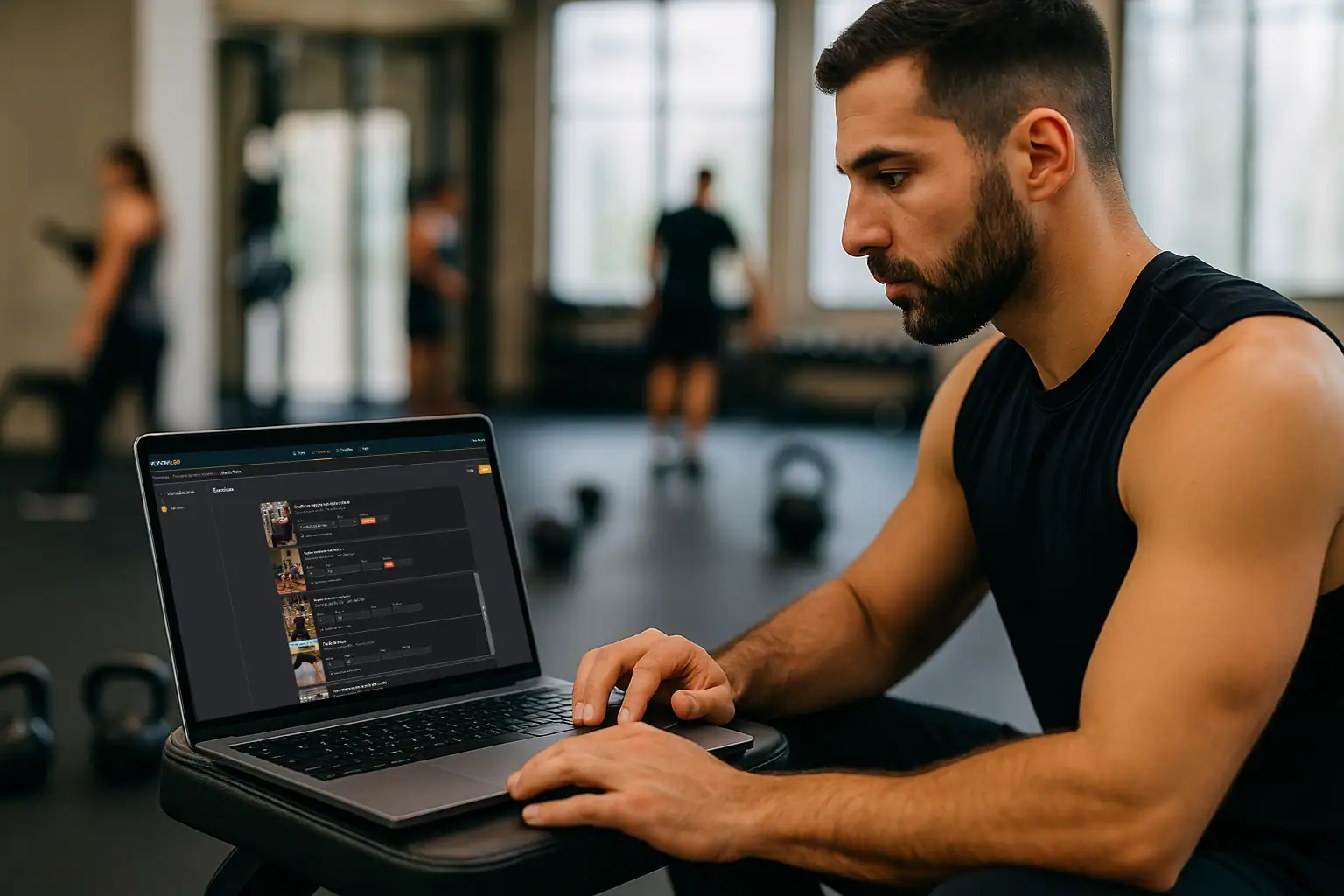
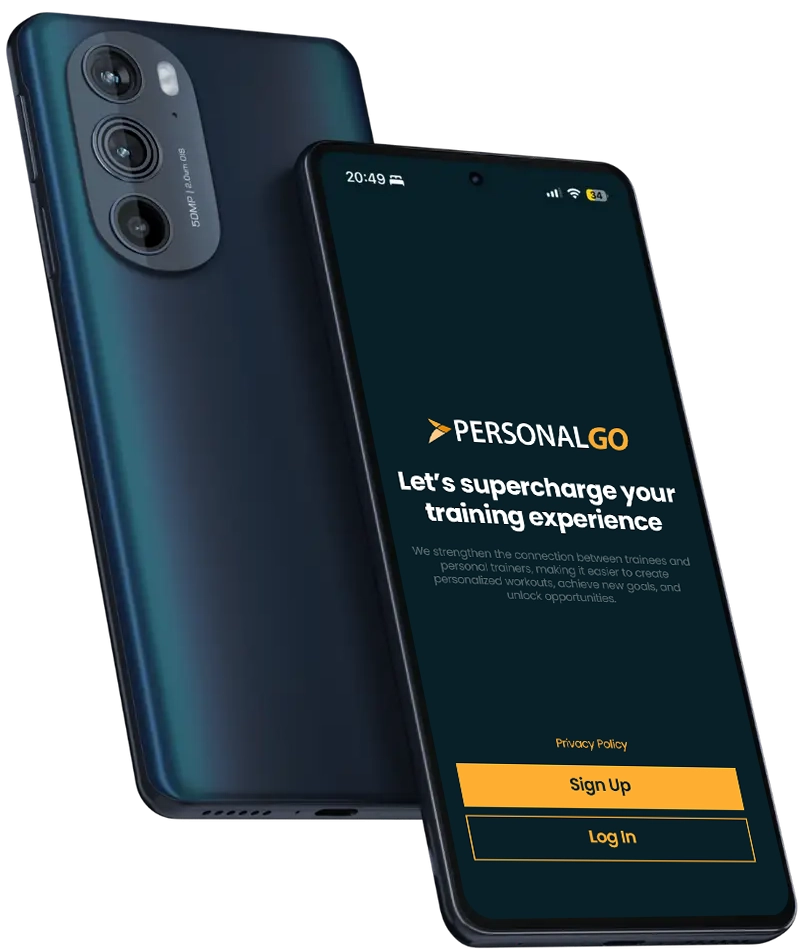
PersonalGO makes online personal training seamless by combining a powerful app with a marketplace of certified trainers.
Finding Your Trainer
Browse PersonalGO’s trainer marketplace with filters for:
- Specialization (fat loss, muscle gain, athletic performance, etc.)
- Credentials and certifications
- Location
- Price
Read trainer profiles and client reviews to find someone who fits your goals and communication style.
Getting Your Custom Program
Once you’ve connected with an online personal trainer on PersonalGO:
- Your trainer assesses your goals, experience, equipment, and any injuries
- Your trainer designs a custom program tailored to your needs
- Your trainer loads the program into PersonalGO’s app for you to follow
- You access the program on your phone
- PersonalGO’s exercise library (4,000+ videos) shows you proper form for each movement
Your trainer can adjust the program anytime based on your feedback and progress data.
Logging Workouts and Communicating with Your Trainer
During your workout:
- Open PersonalGO and start your programmed workout
- After each set, log the weight you lifted, reps completed, and any comments
- The app shows your previous performance for comparison
After your workout:
- Your trainer can review your logged session through the app
- Use PersonalGO’s built-in chat feature to ask questions or discuss your progress
- Your trainer provides feedback and adjustments based on your data
This ongoing feedback loop, powered by real workout data, is what makes online personal training effective.
Online Personal Trainer vs. In-Person: What the Research Shows
The debate is settled: online personal training is just as effective as in-person training.
Key research findings:
- Remote training produces similar strength gains to in-person training
- Virtual coaching is effective for fat loss when combined with proper nutrition
- Video form feedback is often more thorough than in-person coaching (coaches can review videos in detail)
- Adherence is similar between online and in-person clients when the coach-client relationship is strong
The bottom line: The delivery method doesn’t matter. What matters is:
- A well-designed program
- Consistent effort
- A strong coach-client relationship
Online personal training delivers all three.
Download PersonalGO free and start your journey with an online personal trainer today.
References
[1] Schoenfeld, B. J., et al. (2022). Short-term supervised virtual training maintains intensity of effort and produces similar strength adaptations to traditional supervised studio-based resistance training. Journal of Sports Sciences.
[2] Li, G., et al. (2025 ). GPT-4 as a virtual fitness coach: a case study assessing its effectiveness in providing weight loss and fitness guidance. BMC Public Health.
[3] PureGym. (2024 ). Pros and cons of remote personal training. Yahoo Lifestyle.
[4] Fitness Mentors. (2026 ). Best in Personal Training & Fitness Industry Trends for 2026.
[5] Everfit. (2026 ). 9 Personal Training Trends in 2026 That You Need To Know.