Let’s be honest. The hardest part of fitness isn’t the last rep of a heavy squat or the final mile of a long run. It’s just showing up. Life gets busy, motivation fades, and before you know it, your gym shoes are gathering dust. What if there was a better way to stay on track, a tool that fits into your life and keeps you moving toward your goals? Meet the free fitness app, your pocket-sized coach that’s transforming how people stay active, healthy, and consistent.
This isn’t just hype; it’s a real movement. Millions of people are turning to their phones to guide their fitness journeys, and the science shows it’s working. Research from institutions like Harvard Health reveals a clear link between using a physical activity app and a significant increase in exercise engagement [1]. It seems having a plan and a way to see your progress makes all the difference.
The Real Reason a Free Fitness App Works
So, what’s the secret sauce? It boils down to a few key psychological drivers that the best free fitness apps tap into. It’s less about the technology itself and more about what it does for your mindset.
One of the biggest factors is self-efficacy, which is the belief that you can actually succeed. A well-designed app helps build this confidence. By setting small, achievable goals and tracking your progress, you create a cycle of success. Every time you log a workout or hit a new personal record, your brain gets a little hit of dopamine, reinforcing the positive habit and making you believe you can do it again [1]. Success breeds more success.
Another powerful element is social support. We’re wired for connection, and sharing your journey can be a huge motivator. Studies show that app features allowing you to connect with others, share your progress, and receive encouragement can dramatically boost your confidence and consistency [2]. It turns a solitary workout into a shared experience, which can be a game-changer on days when you’d rather hit the snooze button.
More Than Just Counting Reps
The effectiveness of a free fitness app goes beyond simple motivation. The data speaks for itself. People who use these apps are significantly more likely to meet the recommended 150 minutes of moderate-intensity physical activity each week [3]. In fact, some studies have found that using a fitness app can be just as effective as hitting the gym for certain types of workouts [4].
This is because tracking your workouts provides invaluable feedback. When you can look back and see how much stronger you’ve gotten or how much your endurance has improved, it provides tangible proof that your hard work is paying off. This visual evidence is a powerful tool for staying committed long term.
| Key to Success | Why It Matters in a Free Fitness App |
|---|---|
| Building Confidence | Seeing your own progress in black and white proves you are capable of achieving your goals. |
| Staying Motivated | Tracking creates a positive feedback loop that makes you want to keep going. |
| Getting Real Results | Consistent, tracked effort is what ultimately leads to physical change and improved health. |
The Hidden Flaw in Most Free Fitness Apps
However, not all free fitness apps are created equal. Many offer a library of generic, one-size-fits-all workouts. While this might be a good starting point, it often leads to a plateau. Your body is unique, and your workout plan should be too. A generic plan doesn’t account for your specific goals, your body’s mechanics, or any past injuries. It also can’t provide the critical feedback on your form that prevents injury and ensures you’re getting the most out of every movement.
This is where the human element becomes irreplaceable. An algorithm can’t replicate the trained eye, the personalized encouragement, and the deep expertise of a certified personal trainer. This is the missing piece in so many digital fitness solutions.
The Best of Both Worlds: Technology Meets Human Expertise
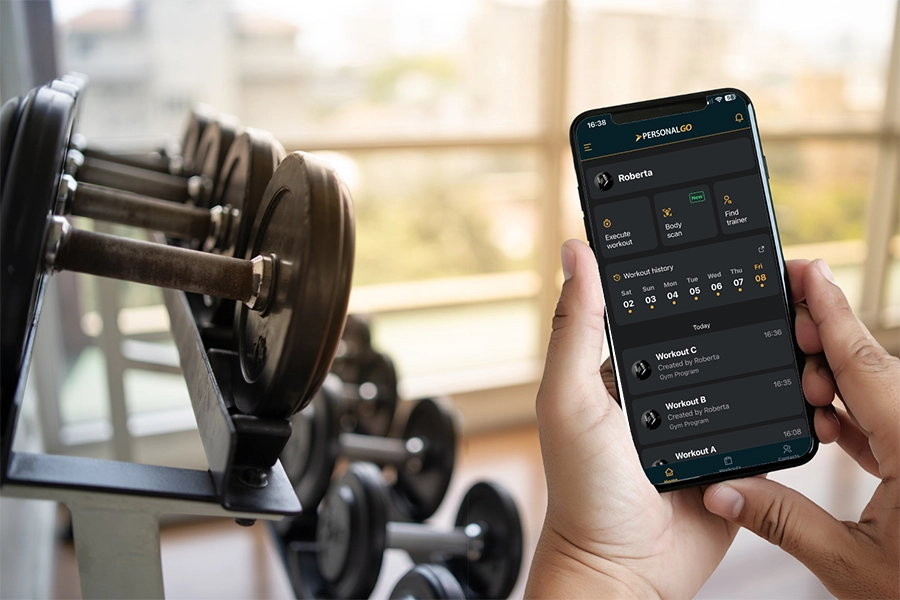
What if a free fitness app could give you more? What if it provided the powerful tracking and convenience of technology, but also connected you with the one thing that truly personalizes your fitness journey: a real human expert?
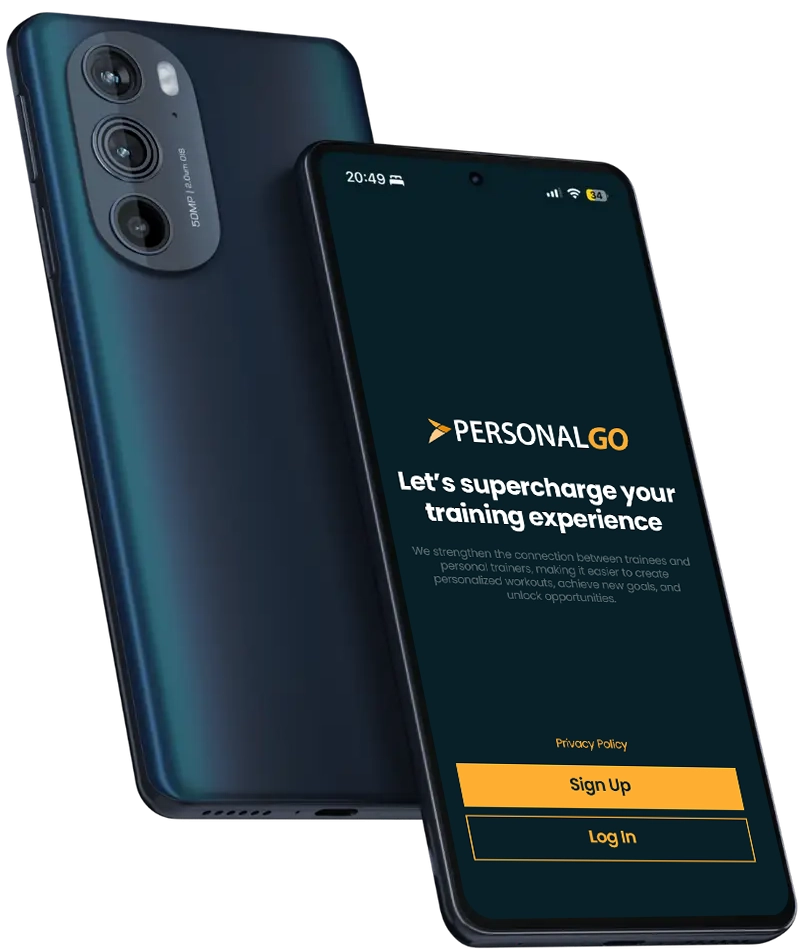
This is the philosophy behind PersonalGO. We believe technology should empower, not replace, the vital connection between client and coach. Our platform was built to be the ultimate tool for anyone serious about fitness. You can use the PersonalGO app completely free to access powerful features like detailed progress tracking and a library of more than 4,000 exercises to create customized workouts. And when you’re ready to take things further, you can upgrade to Premium and unlock the AI Body Scan, a cutting-edge tool that tracks every aspect of your body’s evolution with high precision and delivers complete reports to guide your journey.
But we didn’t stop there. When you’re ready to take your results to the next level, PersonalGO connects you with a global network of certified personal trainers. Our advanced search filters allow you to find the perfect coach for your specific goals, budget, and training style, whether you want to work with them in person or remotely. It’s a seamless bridge between a powerful free fitness app and the personalized guidance that ensures you’re training safely and effectively.
With PersonalGO, you get the freedom and flexibility to train how and where you want, with the confidence that professional expertise is just a tap away. It’s not about generic workouts; it’s about giving you the tools and the connections you need to build a truly sustainable and effective fitness routine. Your journey is personal, and your app should be too.
Ready to see real progress? The free fitness app with over 4,000 exercises, powerful progress tracking, real connections with certified personal trainers, and the precision of AI body scanning. Start today!
References
[1] Harvard Health Publishing. (2020). Making the most of physical activity apps. https://www.health.harvard.edu/blog/making-the-most-of-physical-activity-apps-2020122121631
[2] Hu, J. et al. (2023). Examining the impacts of fitness app features on user well-…. https://www.sciencedirect.com/science/article/abs/pii/S0378720623000447
[3] Tong, H.L. et al. (2022). The use of mobile apps and fitness trackers to promote…. https://pmc.ncbi.nlm.nih.gov/articles/PMC9931267/
[4] Padmasekara, G. (2014). Fitness apps, a Valid Alternative to the Gym: a pilot study. https://www.journalmtm.com/2014/fitness-apps-a-valid-alternative-to-the-gym-a-pilot-study/