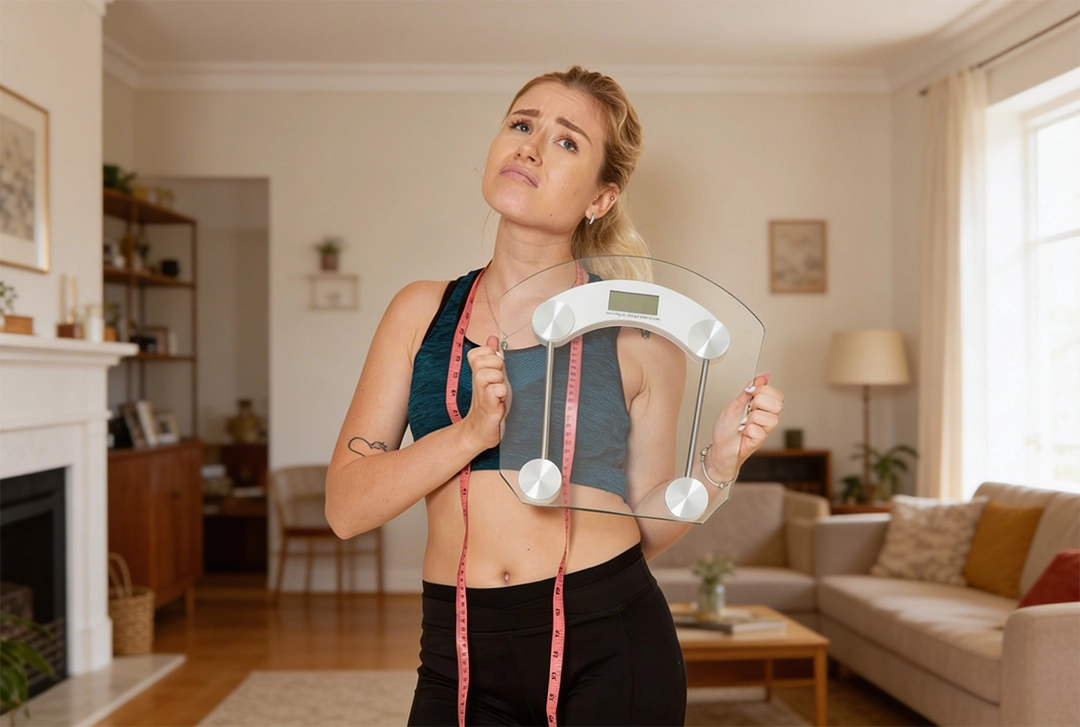
You did it. You hit your goal weight. But when you look in the mirror, you don’t see the toned, athletic physique you were hoping for. Instead, you feel… soft. This frustrating state is often called “skinny fat,” and it’s the result of a common mistake: focusing only on the number on the scale. The real goal should be to lose weight without losing muscle.
This article is a diagnostic tool. We’ll explain why traditional weight loss methods can lead to this outcome and shift your focus from simple weight loss to body recomposition, the process of building muscle and losing fat simultaneously.
The Scale Lied to You: Understanding the “Skinny Fat” Phenomenon
“Skinny fat” is a term for someone who has a normal weight and BMI but a high body fat percentage and low muscle mass. This happens when you lose weight, but a significant portion of that loss comes from muscle tissue, not just fat. The scale doesn’t tell the whole story. It can’t distinguish between a pound of fat and a pound of muscle, and that’s a critical distinction for your health and appearance.
Research shows that adults with normal BMI but high body fat percentage (the “skinny-fat” phenotype) have significantly higher odds of inflammation and are at increased risk for heart disease, high cholesterol, diabetes, and lower bone mineral density.
The 3 Common Diet Mistakes That Lead to Muscle Loss
If you want to lose weight without losing muscle, you need to avoid these common pitfalls:
| Mistake | Why It Causes Muscle Loss | The Fix |
|---|---|---|
| Severe Calorie Restriction | Forces body to break down muscle for energy | Maintain moderate deficit (500-750 cal/day max) |
| Insufficient Protein Intake | Deprives body of amino acids needed for muscle repair | Consume 1.6-2.2g protein per kg body weight daily |
| Too Much Cardio, No Strength Training | Doesn't signal body to preserve muscle mass | Add resistance training 3-5x per week |
1. Severe Calorie Restriction
Crash diets that drastically cut calories can force your body to break down muscle tissue for energy. Research shows that maintaining a moderate calorie deficit of about 500 to 750 calories daily helps you lose around 1-2 pounds per week while preserving muscle.
2. Not Eating Enough Protein
Protein is the building block of muscle. Without enough of it, your body can’t repair and build muscle tissue, especially when you’re in a calorie deficit. Studies recommend 1.6-2.2 grams of protein per kilogram of body weight per day for those trying to preserve muscle during weight loss.
3. Too Much Cardio, Not Enough Strength Training
While cardio is great for heart health and burning calories, it doesn’t do much to build or maintain muscle mass. Relying solely on cardio for weight loss is a common cause of the “skinny fat” look. Research confirms that resistance training is essential for preserving muscle during weight loss.
Why Your Goal Shouldn’t Be to Lose Weight Without Losing Muscle, But to Gain Muscle
The key to solving the “skinny fat” problem is to shift your mindset. The goal isn’t just to preserve the muscle you have; it’s to actively build more. This is the essence of body recomposition, the gradual process of simultaneously building muscle and losing fat, resulting in a more toned appearance and improved metabolism.
The Role of Protein in Building a Leaner Physique
Protein is your most important tool in this process. A high-protein diet helps you feel full, which can prevent overeating. More importantly, it provides the amino acids your body needs to build and repair muscle tissue, especially when combined with strength training. Aim for 1.2–1.6 grams of protein per kilogram of body weight per day, spread evenly across meals.
The Importance of a Foundational Strength Program
Strength training is the signal that tells your body to build muscle. When you lift weights, you create microscopic tears in your muscle fibers. Your body then repairs these tears, making the muscles stronger and larger over time. This is how you build the lean, toned physique you’re looking for. Focus on compound movements like squats, deadlifts, bench presses, and rows at least 3-5 times per week.
Ditch the Scale: The Metrics You Should Be Tracking Instead
To truly track your progress, you need to look beyond the scale. Here are the metrics that matter for body recomposition:
- Body Measurements: Tracking the circumference of your waist, hips, and limbs can give you a much better indication of fat loss and muscle gain.
- Progress Photos: A picture is worth a thousand words. Taking photos every 4-6 weeks can reveal changes that the scale can’t.
- How Your Clothes Fit: Are your pants looser around the waist but tighter in the thighs? That’s a great sign of body recomposition.
- Strength Gains: Are you lifting heavier or doing more reps? This is a clear indicator that you’re building muscle.
- Body Fat Percentage: If possible, get regular body composition assessments to track actual fat loss vs. muscle gain.
How to Use a Body Measurement App to See Your Real Progress
Technology can make tracking these new metrics simple. An app like PersonalGO allows you to log your body measurements and see your progress over time. The app’s AI Body Scanning feature can provide a detailed analysis of your body composition, giving you a clear picture of your fat loss and muscle gain. This is the data you need to stay motivated and make informed decisions about your training and nutrition.
It’s time to track what matters. See how easy it is to log your protein intake and body measurements with the PersonalGO app.
Stop chasing the number on the scale. Download PersonalGO to start tracking the metrics that lead to real body recomposition and build a body you’re proud of.
Disclaimer: This article is for informational purposes. Consult with a healthcare provider or registered dietitian before making significant changes to your diet or exercise routine.
References
[1] InBody USA. (n.d. ). What is Skinny Fat (And How to Tell if You Are).
[2] Liu-Galvin, R. et al. (2025 ). More Evidence of the Health Risks from Being Skinny Fat.
[3] Bryan Health. (n.d. ). Body Composition: Can You be ‘Skinny Fat’?
[4] Healthline. (2025 ). How to Lose Fat Without Losing Muscle: Tips and Tricks.
[5] InBody USA. (2024 ). 5 Ways to Lose Body Fat Without Losing Skeletal Muscle Mass.
[6] Cava, E. et al. (2017 ). Preserving Healthy Muscle during Weight Loss.
[7] Anytime Fitness. (2024 ). More Muscle, Less Fat: A Body Recomposition Guide.
[8] Harvard Health Publishing. (2026 ). Trying to lose weight? Be careful not to lose muscle.
[9] Healthline. (n.d. ). How to Lose Fat and Gain Muscle for Body Recomposition.